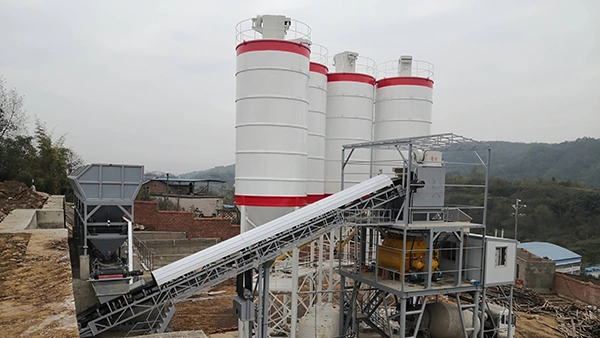
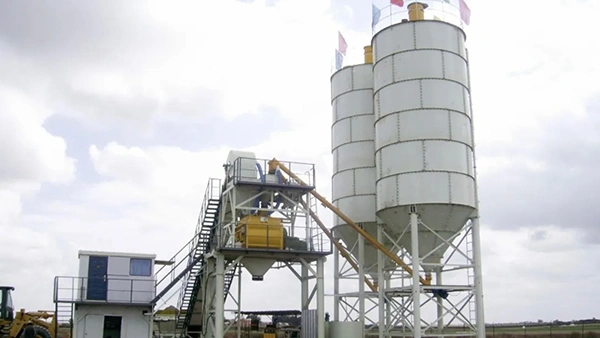
HZS60
Stationary Concrete Batching Plant
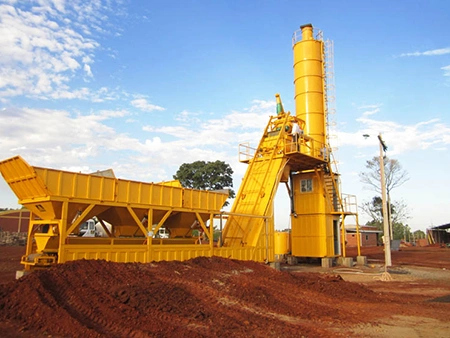
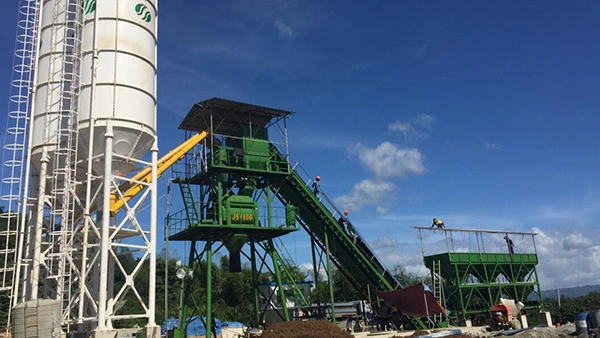
These 60 m³/h stationary concrete batching plants use a belt conveyor to move aggregates from the batching section to the mixer, instead of lifting them in a skip bucket. The belt conveyor moves aggregates steadily to the mixer, which helps keep concrete production consistent throughout the day. These concrete plants are commonly used for medium-size construction projects, road and bridge work, and precast concrete production. The twin-shaft mixer, weighing system and larger material storage section are set up for regular, continuous batching.
-
 Production Capacity: 60 m³/h
 -
 Mixer Type: Twin-Shaft Concrete Mixer
 -
 Mixer Power: 2 x 18.5 kW
 -
 Aggregate Bin Capacity: 4 x 13 m³
- These concrete plants have an inclined belt conveyor and an aggregate hopper, where the next batch of materials can wait while the mixer handles the current one, so there is less time between feeding cycles and hourly output is higher.
- Equipped with a JS1000 twin-shaft mixer that handles long periods of continuous production. The mixers have thick high-chromium wear-resistant alloy liners and blades to protect the mixing chamber, while multiple floating shaft-end seals and automatic lubrication help control slurry leakage and reduce wear.
- Due to separate electronic weighing for aggregates, cementitious materials, water and additives, each material can be measured according to the required mix proportions. The weighing accuracy stays within ±2% for aggregates and ±1% for powders, water and additives.
- The PLC control system manages batching and mixing automatically, with one-button start and stop for daily operation. Operators can also switch between automatic and manual modes for daily production as necessary.
- As they come with dust collection as standard, these concrete plants can control dust around the material handling and mixing areas more effectively. Low operating noise also helps meet environmental requirements on construction sites.
| Overall | Theoretical Production Capacity | 60 m³/h |
| Discharge Height | ≥ 3.8 m | |
| Installed Power | 110 kW | |
| Mixing System | Mixer Model | JS1000 |
| Mixer Motor Power | 2×18.5 kW | |
| Nominal Mixer Capacity | 1000 L | |
| Aggregate Size | Φ60-80 mm | |
| Storage System | Powder Silo Capacity | 3×100 t |
| Aggregate Bin Capacity | 4×13 m³ | |
| Aggregate Types | 3/4 | |
| Weighing System | Cumulative Aggregate Weighing Range & Accuracy | 3000 kg ± 2% |
| Cement Weighing Range & Accuracy | 600 kg ± 1% | |
| Fly Ash Weighing Range & Accuracy | 400 kg ± 1% | |
| Water Weighing Range & Accuracy | 400 kg ± 1% | |
| Admixture Weighing Range & Accuracy | 50 kg ± 1% |
-
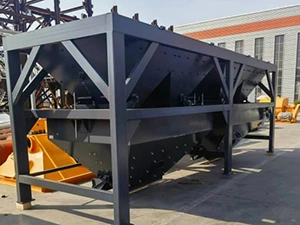 Aggregate Batching System
The aggregate batcher has 3 to 6 separate bins for sand and stone, with an independent weighing hopper for each material. Coarse and fine weighing modes improve dosing control, with an accuracy of ±2%, while a horizontal belt collects the measured aggregates and feeds them steadily to the inclined conveyor.
-
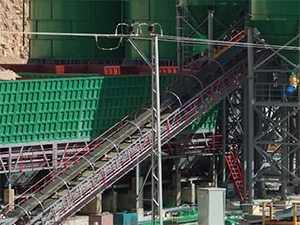 Belt Conveyor System
Aggregate transport uses a horizontal belt together with an inclined belt for continuous feeding to the mixer. The inclined conveyor normally works at an angle of about 18° to 22°, which keeps material transfer steady between the batching and mixing sections.
-
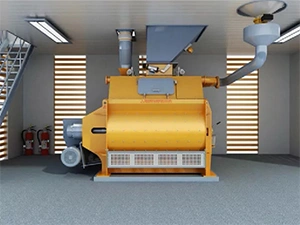 Twin-Shaft Concrete Mixer
The concrete plants use twin-shaft compulsory mixers that have a large mixing chamber, wear-resistant liners and blades, plus a shaft design that helps reduce material buildup. An aggregate hopper above the mixer holds the materials for the next batch while the current batch is still mixing, so feeding can begin sooner once the mixer is ready.
-
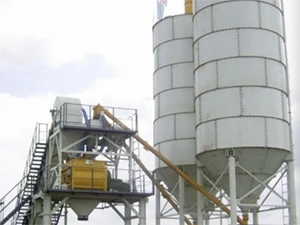 Powder Storage and Weighing System
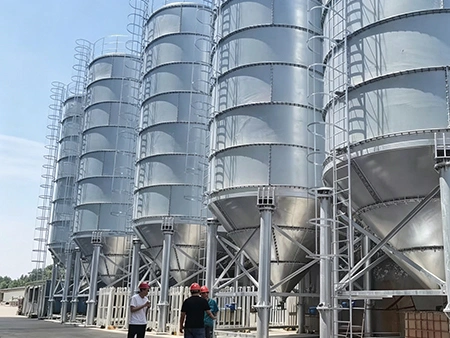
Cement and fly ash stay (cementitious materials) in separate silos and move through screw conveyors to the powder weighing units. Water and additives have their own scales as well, so all main materials can be measured automatically before mixing.
-
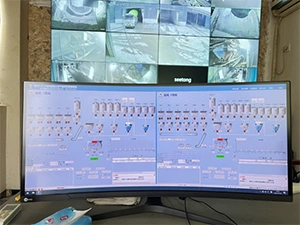 Electrical Control System and Control Room
The control system works in both automatic and manual modes and uses a full English interface. It can store concrete mix recipes, correct weighing automatically when needed, show fault alarms, print production data and support remote monitoring.