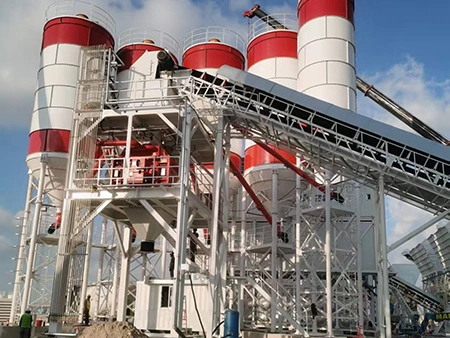
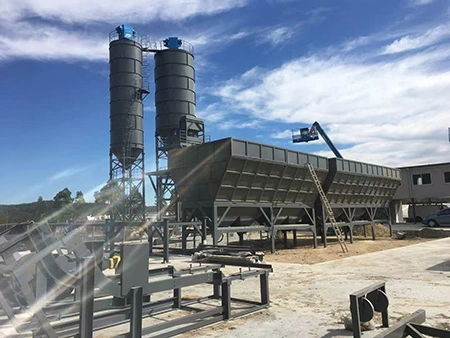
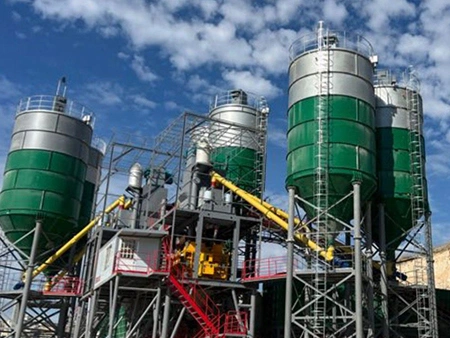
Stationary Concrete Batching Plants

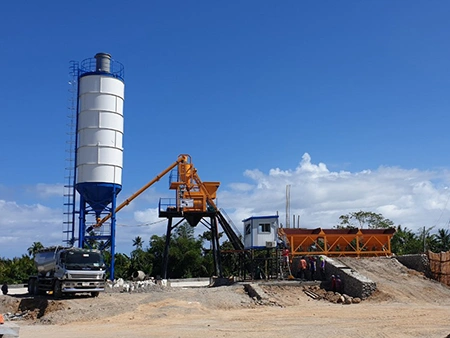
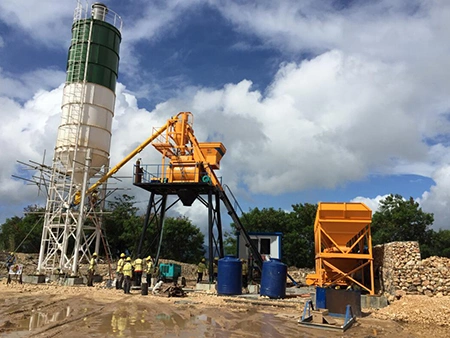
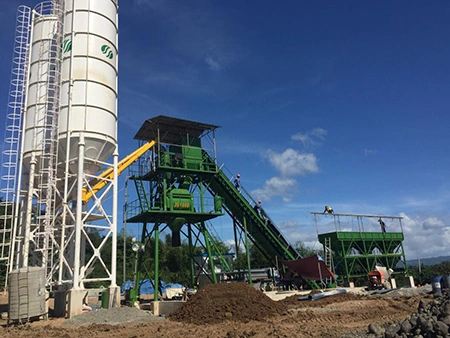
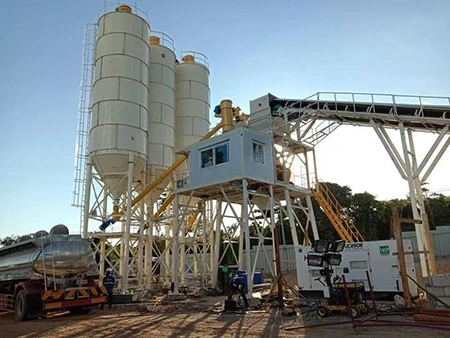
Stationary concrete batching plants are suitable for long-term projects that need a continuous supply of concrete from one production site. Their modular structure covers aggregate feeding, weighing, mixing and discharge, while the PLC control system manages the concrete production process automatically. Materials used for concrete production are usually weighed separately, with ±1% tolerance for powders (such as cement, fly ash, etc.), water and additives and ±2% for aggregates, so the proportions are consistent in each batch.

Depending on the available space and production needs, our concrete plants can use either skip hoist or belt feeding. Skip hoist concrete plants produce 25–75 m³/h and lift aggregates by bucket, which takes up less space than a long belt conveyor and is suitable for sites that have limited space. Belt-fed concrete plants can produce 60–270 m³/h and use continuous aggregate conveying with twin-shaft mixers when a higher concrete output is required. Pulse dust collection systems are included as standard to reduce dust emissions and meet industrial environmental requirements.
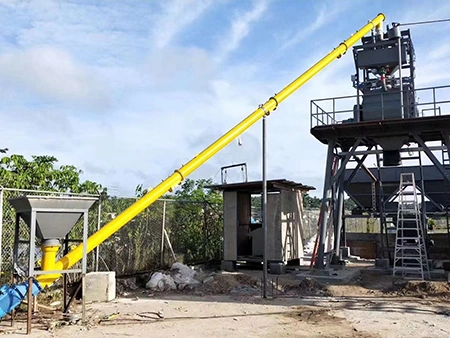
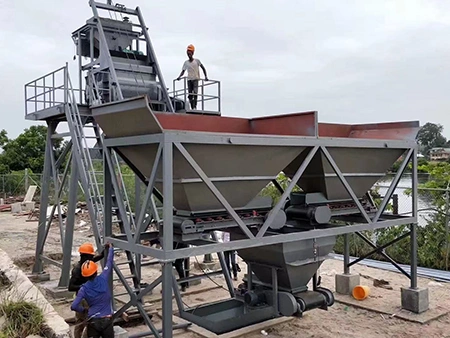
Concrete batching plants are production systems used to prepare concrete by measuring, feeding and mixing cement, aggregates, water and additives in controlled proportions. The batching process includes material storage and conveying, separate weighing of each ingredient, concrete mixing and automatic control through to final discharge. Since the concrete production cycle is automatic, batching plants can provide consistent output for construction projects that need regular or large-volume concrete supply.
  • Large Building Projects:
    Stationary concrete batching plants are widely used in high-rise buildings, office complexes and large commercial projects that need high volumes of concrete over long construction periods. Thanks to their continuous production capacity, they are suitable for projects with steady concrete demand, while accurate batching helps keep the mix consistent throughout construction.
  • Infrastructure Construction:
    Bridges, tunnels, metro lines, highways and airport runways usually involve long construction schedules and strict requirements for concrete strength, durability and water resistance. Strength, durability and water resistance are often critical in these projects, so a stable production process and consistent mix proportions are especially important throughout construction.
  • Precast Concrete Manufacturing:
    Precast factories usually produce large numbers of the same components, such as wall panels, pipe piles, staircases and bridge elements. To keep these products with uniform quality, the concrete used for each production run needs to follow the same mix proportions. Stationary batching plants control the amount of each raw material through automatic weighing and preset recipes, so factories can repeat the same concrete mix more reliably during large-scale production.
  • Ready-Mix Concrete Supply:
    For ready-mix concrete producers, stationary batching plants can serve as a central production point for supplying several nearby construction sites. Their higher output makes it easier to handle orders from different projects during the same working day. Enclosed sections around material handling and mixing can also reduce dust and operating noise, an important consideration for plants that run continuously over long periods.