HZS25
Stationary Concrete Batching Plant
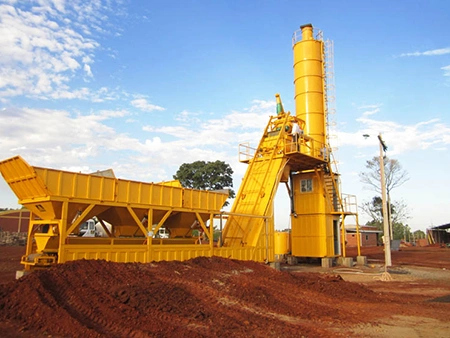
These 25 m³/h stationary concrete batching plants use a skip hoist and rail-mounted lifting system to carry aggregates to the mixer. The skip hoist consists of a lifting bucket that travels along the rail and raises the weighed aggregates from the batching section to the mixer. Since aggregate feeding does not require a long belt conveyor, the concrete plant needs less space and can be installed more easily on compact construction sites. Our 25 m³/h stationary concrete plants have a smaller footprint and relatively simple installation, which suits local infrastructure work, small precast concrete plants, road and bridge construction, and other projects with limited site space or more frequent relocation needs.
-
 Production Capacity: 25 m³/h
 -
 Mixer Type: Twin-Shaft Concrete Mixer
 -
 Mixer Power: 18.5 kW
 -
 Aggregate Bin Capacity: 3×3 m³
- The vertical skip hoist feeds aggregates to the mixer without a long conveying belt, so the layout of the concrete plant is compact and fits more easily on construction sites that have limited space.
- The control system has both automatic and manual modes, with simple controls that operators can learn quickly. Daily operation is also easier to manage, with fewer complicated steps during routine use and basic maintenance.
- As the skip hoist works with relatively low lifting resistance, aggregate feeding generally uses less power than belt-fed plants in the same capacity range.
| Theoretical Production Capacity (m³/h) | 25 |
| Mixer Model | JS500 |
| Mixer Power (kW) | 18.5 |
| Mixing Cycle (s) | 67 |
| Max. Aggregate Size (mm) | Φ60 |
| Standard Aggregate Bin Capacity (m³) | 3×3 |
| Aggregate Types | 2/3 |
| Discharge Height (m) | 3.8 |
| Total Weight (t) | ≈15 |
| Installed Power (kW) | ≈65 |
-
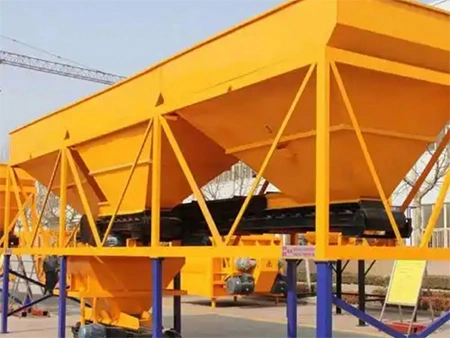 Aggregate Batching System
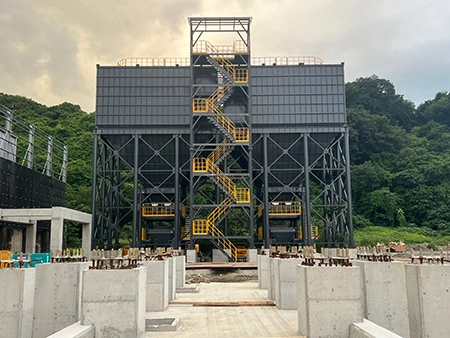
The aggregate batching system has 2 to 4 bins for sand and stone. Each material is weighed separately within ±2% accuracy before a belt conveyor sends the aggregates to the skip hoist. Wear-resistant liners in the feeding section help prevent jamming and spillage.
-
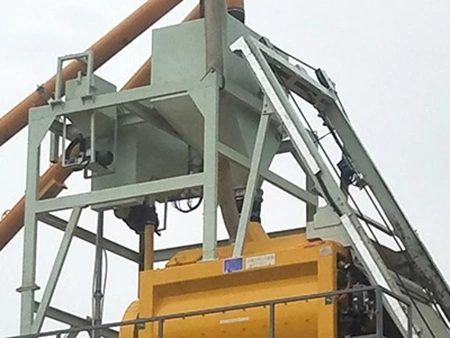 Skip Hoist Feeding System
After weighing, the aggregates enter the skip bucket and travel along the rail to the mixer. A winch, steel wire rope and pulleys move the bucket up and down, while limit switches control its travel and stop positions.
-
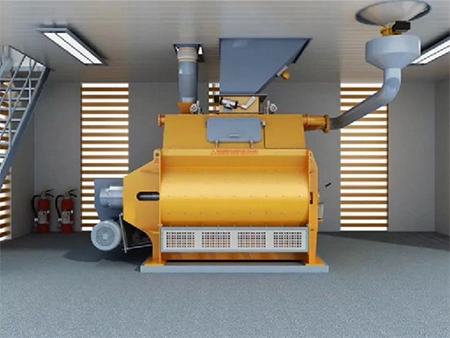 Twin-Shaft Concrete Mixer
The 25 m³/h plants use twin-shaft mixers as standard, where aggregates, cement, fly ash, water and additives are blended into the final concrete mix. The two horizontal shafts provide even mixing, shorter cycles and less material buildup around the shafts.
-
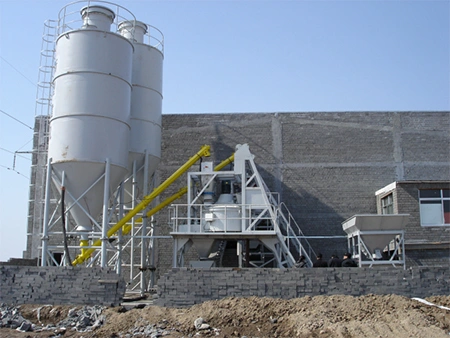 Powder Storage and Weighing System
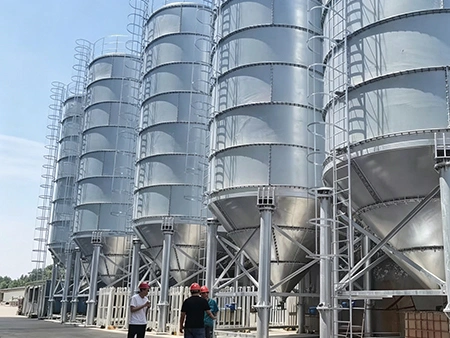
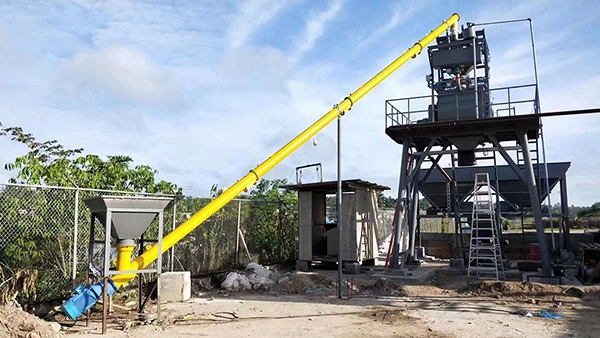
Cement and fly ash are stored in separate silos and transferred by screw conveyors to their weighing units, while dedicated scales measure water and additives separately before mixing.
-
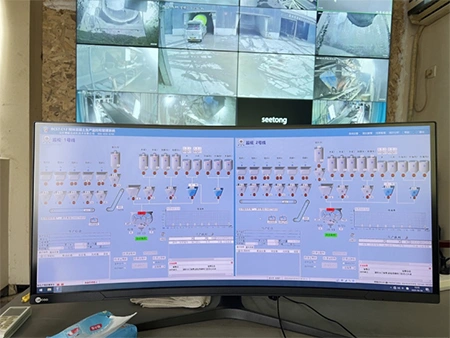 Electrical Control System and Control Room
Operators can switch between automatic and manual modes while viewing mix proportions, production output and fault alarms in real time. Remote monitoring provides access to the same plant information when operators are off site.